THE ART OF THE CONSIDERED TABLE: HOSTING WITH INTENTION
In collaboration with Industry West
There is a specific kind of satisfaction that comes from a dinner table that has been genuinely thought about, not just set. The kind of table that makes your guests take a moment before they sit down, where the weight of the chairs, the warmth of the wood, the quality of everything you have placed upon it communicates something before a single dish arrives. It’s the difference between a meal and an experience, and the foundation of that difference is almost always the furniture.
For my birthday dinner one summer day, I spent the better part of a Saturday, seven in the morning until seven in the evening, cooking, arranging, and preparing for the people I loved most. Beef tartare with truffle aioli. Polenta bites with butternut squash and honey. Two kinds of pizza. A rose, cardamom and pistachio cake with edible flowers. It was, by any reasonable measure, an excessive undertaking, and I would do it again immediately. Hosting is my therapy, and I have never once taken the easy route when the ambitious one is available.

What anchored all of it was the table.
THE ARBOR DINING TABLE
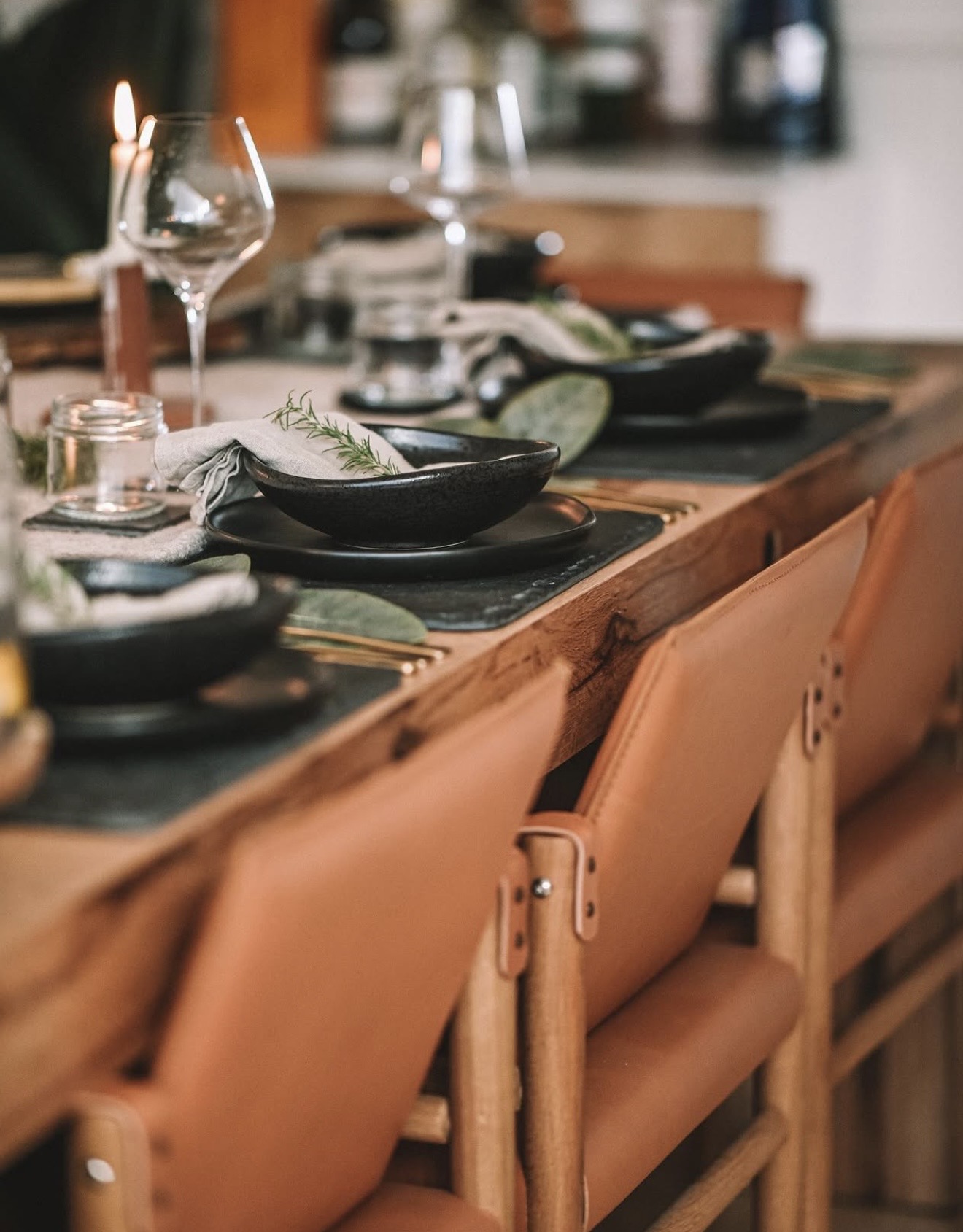
Industry West’s Arbor Dining Table was one of those pieces that earns its place in a room through material honesty rather than decorative excess. Handcrafted from solid reclaimed white oak timbers salvaged from decades-old buildings, it was designed by artisan Theo Eichholtz with a Parsons-inspired silhouette that is clean enough to recede and substantial enough to command. The surface carries the patina of its previous life without apology, every grain and variation in the wood a record of age and use that no new timber can replicate.
From a design standpoint, reclaimed oak reads differently in a room than new wood. It has already done the work of settling into itself. It does not need the space to accommodate it. It simply belongs.
How I styled it: I kept the table surface layered but uncluttered. Linen napkins folded loosely. Matte black ceramic plates that absorbed the candlelight rather than reflecting it. Eucalyptus leaves placed directly on the table rather than in a vase, low enough that they did not interrupt the sightline across the table. Taper candles at varying heights in simple holders, nothing gilded, nothing ornate, because the table itself was providing all the warmth the surface needed.
THE MARSEILLE CHAIR IN CAMEL LEATHER
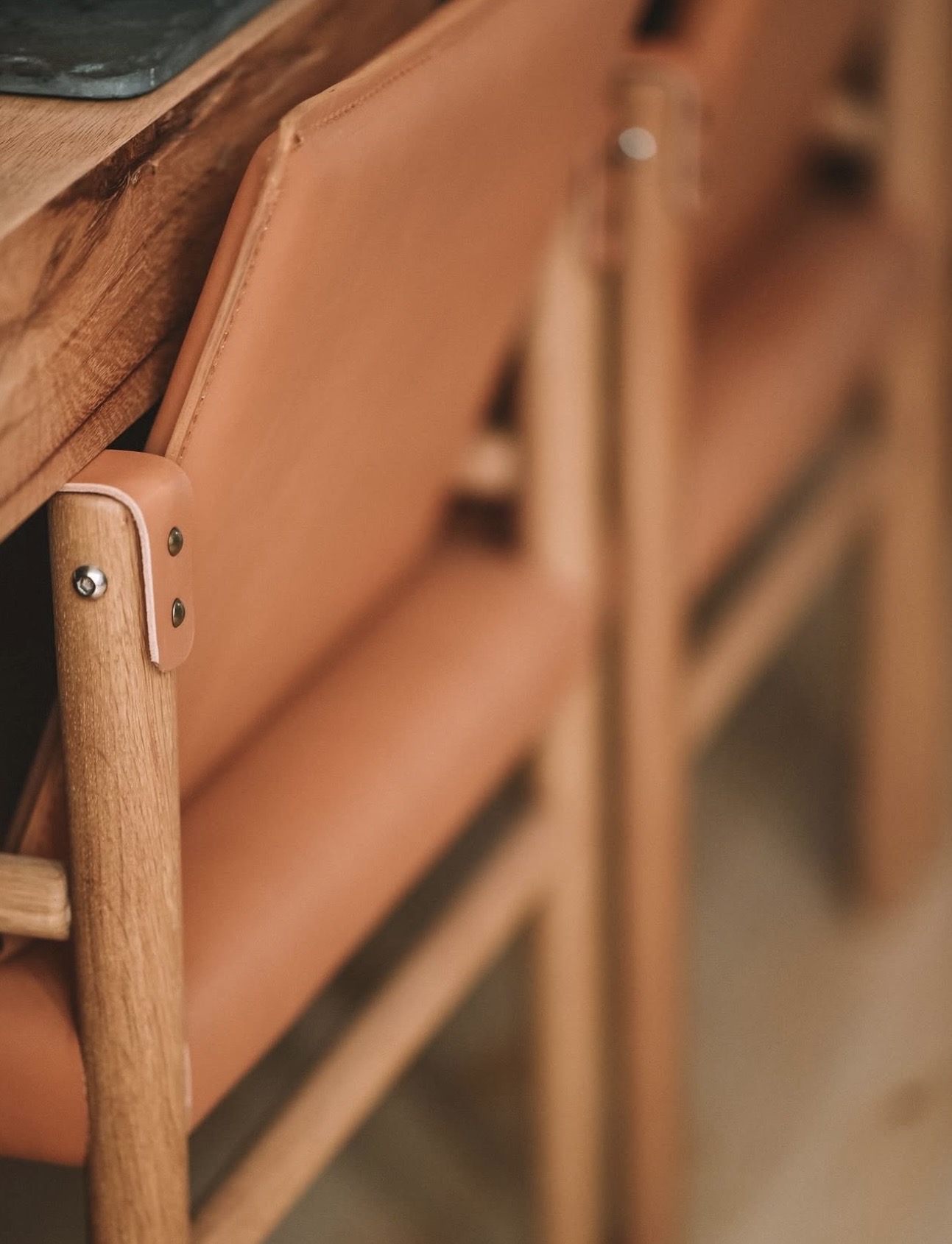
If the Arbor Table is the anchor, the Marseille Chair is the character. A campaign-style silhouette in smooth camel leather with a natural wood frame, it is the kind of chair that looks equally at home in a Parisian design studio and a California dining room, which is precisely the quality I look for in any piece I bring into a space.
The leather ages with use in the best possible way, developing a softness and depth over time that synthetic materials can never approximate. And the camel tone, warm without being yellow, earthy without being heavy, sits beautifully against the natural variations in the reclaimed oak without competing for attention.
The design principle at work here: when pairing a statement table with statement chairs, the relationship between the two pieces should feel like a conversation rather than a competition. The Arbor Table and Marseille Chair work because they share a material vocabulary, wood and leather, natural and warm, without being identical in tone or texture. One is pale and raw. The other is rich and burnished. The contrast is what makes the combination sing.
THREE THINGS I LEARNED FROM THIS TABLE
In my opinion, a dining table should not the room’s background, it should be the room’s reason for existing, and everything else, the lighting, the flooring, the art on the walls, should be chosen in relationship to it rather than independently of it.
The quality of your furniture communicates to your guests before you do. People feel the weight of a well-made chair the moment they pull it out. They notice the texture of a reclaimed surface before the first course arrives. Investment in the right pieces is investment in the experience you create for the people you love.
Restraint in styling reveals the furniture. The impulse to add more, more flowers, more objects, more layers, almost always works against the pieces themselves. The Arbor Table needs very little. Give it breathing room and it does the rest.
If you are building a dining space around pieces that are built to last and designed to be lived in rather than preserved, start there.